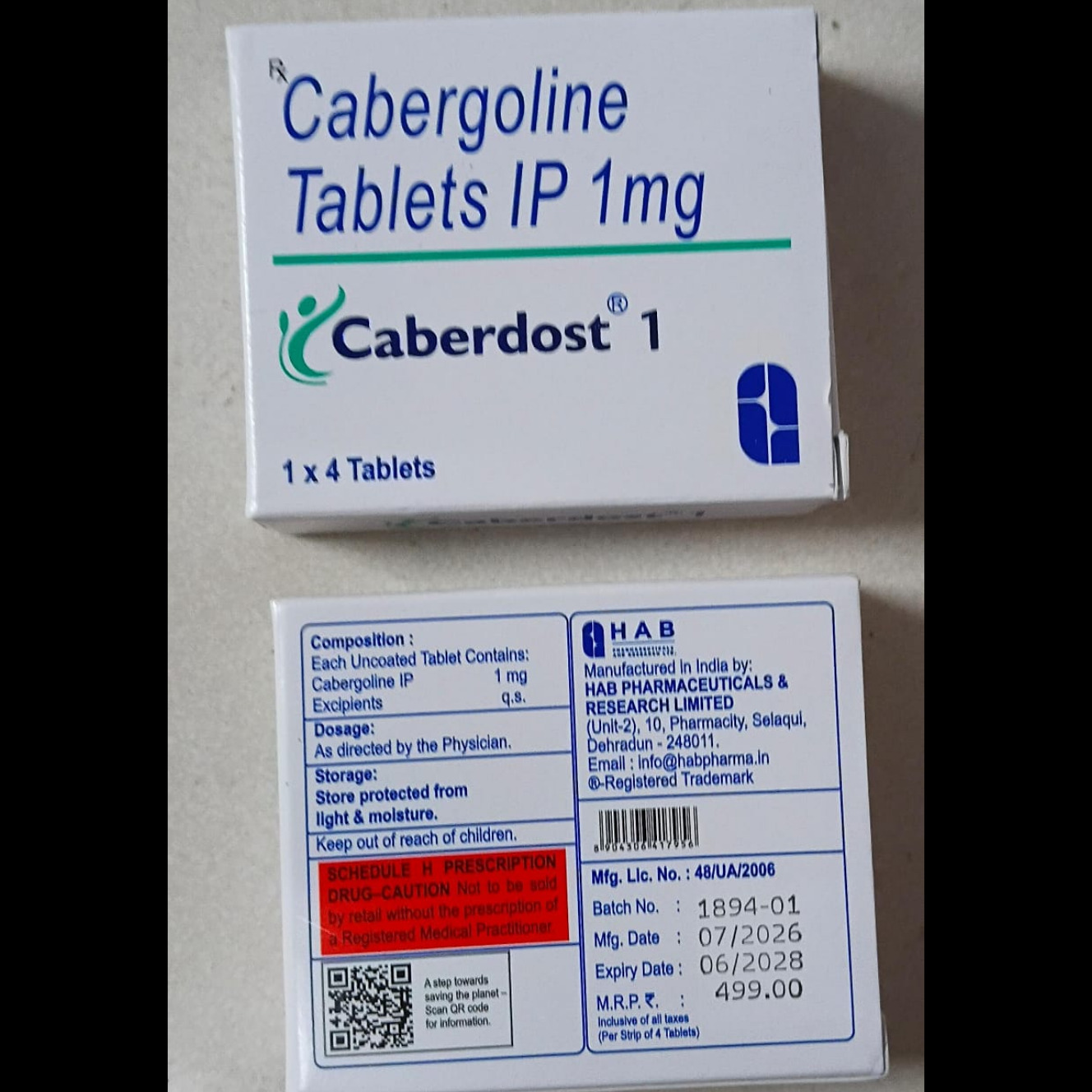
Caberdost 1 mg is a higher-strength oral tablet containing Cabergoline (1 mg) as its active ingredient. Because cabergoline is a potent long-acting dopamine agonist, the 1 mg dose is double the standard initiating strength (0.25 mg or 0.5 mg) and carries a higher risk of adverse cardiovascular and neurological effects if taken incorrectly. Medical Indications & Dosing ContextHyperprolactinemia & Pituitary Adenomas (Prolactinomas):Used to lower severe elevations of prolactin and shrink prolactin-secreting pituitary tumors. Dosing: Patients rarely start on 1 mg. Clinical guidelines recommend starting at 0.25 mg or 0.5 mg per week, only titrating up to a 1 mg total weekly dose (often divided into 0.5 mg twice weekly) based on blood prolactin monitoring.Lactation Suppression:When used to inhibit post-partum lactation, the standard clinical protocol is a total single dose of 1 mg (given as two 0.5 mg tablets or one 1 mg tablet on the first day post-delivery). Parkinson’s Disease (Off-Label / Adjunctive):High-dose cabergoline regimens are sometimes prescribed as an adjunct to levodopa, though this is less common due to cardiac risks.Non-Medical Misuse (Steroid Cycle Polypharmacy Context)Continuing from the context of performance-enhancing drugs (Stanozolol, Testosterone Enanthate):Non-prescribed users using prolactin-elevating anabolic steroids (such as Trenbolone or Nandrolone) often seek cabergoline to control prolactin-induced gynecomastia or erectile dysfunction.High-Dose Danger: Taking a full 1 mg tablet at once outside a physician's guidance poses an extreme risk of severe orthostatic hypotension (blood pressure crash), sudden fainting (syncope), severe nausea, and mental confusion. Increased Risks Associated with the 1 mg StrengthHigher doses of dopamine agonists carry heightened safety concerns:Severe Orthostatic Hypotension & Syncope:Doses of 1 mg or higher significantly impair the autonomic body’s blood pressure regulation. A rapid drop in blood pressure when standing up can cause dizziness, blurred vision, or fainting. Cardiac Valve Fibrosis (Valvulopathy):Accumulating high total doses of cabergoline causes thickening and scarring of heart valves. Patients receiving doses near or above 1 mg per week require baseline and periodic echocardiograms to check for valvular regurgitation. Pleural and Pericardial Fibrosis:Risk of fibrotic tissue buildup around the lungs, heart, or retroperitoneal cavity. Impulse Control Disorders:Dopamine hyper-stimulation can trigger intense, uncontrollable urges, such as compulsive gambling, hypersexuality, or obsessive spending.Important Usage PrecautionsFood Administration: Cabergoline tablets should always be swallowed whole with food or an evening meal to mitigate severe gastrointestinal distress and nausea.Driving / Operating Machinery: Avoid driving or operating heavy equipment, as 1 mg can cause sudden somnolence (extreme sleepiness) and dizziness. Strict Monitoring: Always consult an endocrinologist before starting, stopping, or altering cabergoline dosages. Regular blood pressure tests and hormone panels are mandatory.