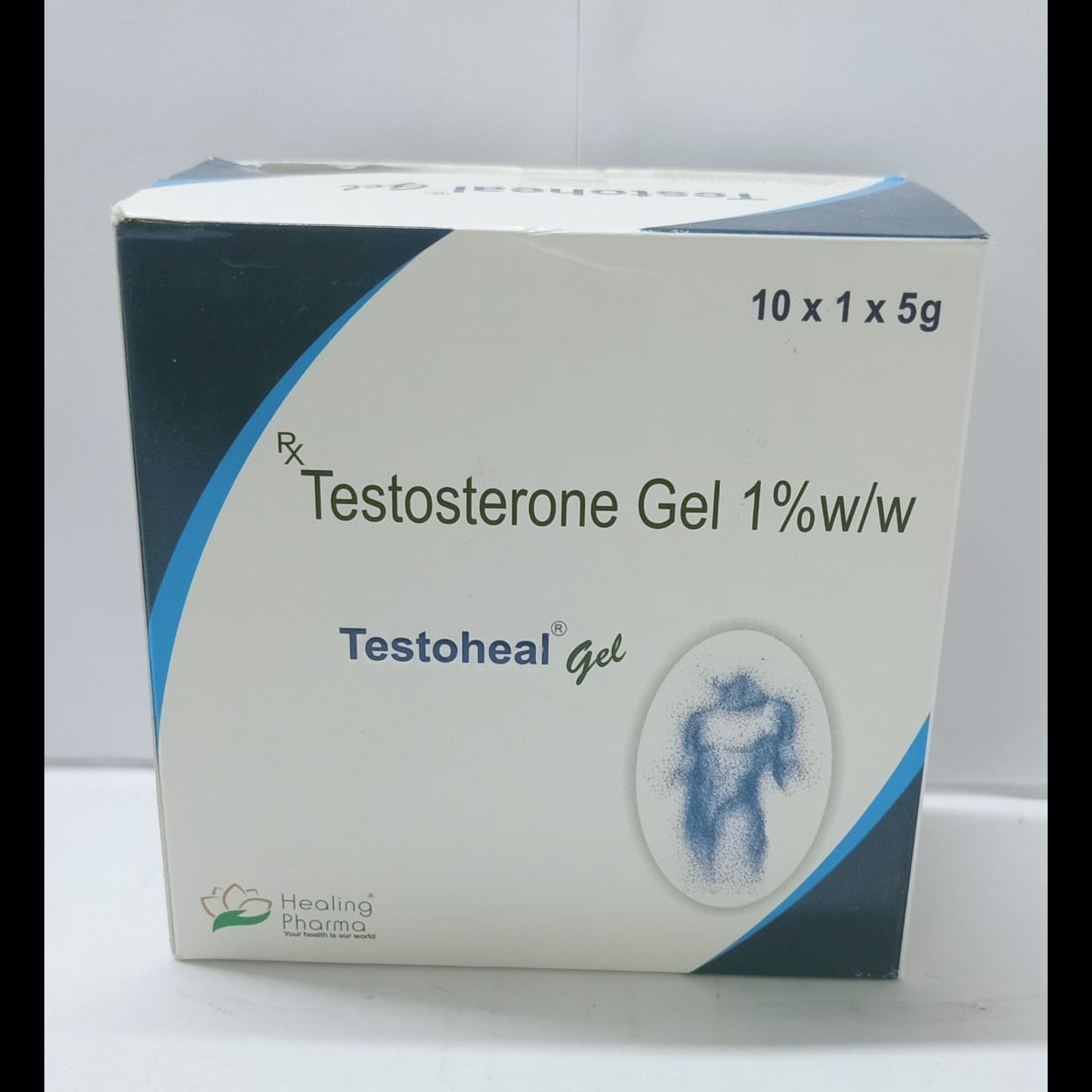
Testoheal Gel is a topical hormone replacement therapy.
1. Active Ingredient & Composition
Active Ingredient: Testosterone 1% w/w
Form: Topical transdermal gel (typically available in 5g sachets).
2. Indications & Uses
Testoheal Gel is prescribed for:
Male Hypogonadism: Treating adult men who produce insufficient natural testosterone.
Symptoms of Testosterone Deficiency: Helps address fatigue, low libido, loss of muscle mass, decreased bone density, and mood changes caused by low hormone levels.
3. Application & Dosage Instructions
Site of Application: Apply as a thin layer to clean, dry, unbroken skin on the shoulders, upper arms, or abdomen.
Genital Exclusion: Do NOT apply to the genitals (scrotum or penis) or on broken/damaged skin, as this can cause severe irritation.
Timing: Usually applied once daily, preferably in the morning.
Handwashing & Drying: Thoroughly wash hands with soap and water immediately after application. Allow the gel to dry completely before covering the area with clothing.
4. CRITICAL WARNING: Secondary Transfer Prevention
Testosterone gel can easily rub off onto women or children through skin-to-skin contact, causing potential hormone disruption, virilization, or developmental harm.
Cover the Area: Keep application sites covered with clothing once dry.
Wash Contact Areas: Clean the application site thoroughly with soap and water if skin-to-skin contact with another person is expected.
Accidental Exposure: If a partner or child touches the gel or unwashed application site, wash their affected skin immediately with soap and water.
5. Side Effects
Common: Skin redness, irritation, or burning at the application site, acne, headache, or mild mood changes.
Hormonal Effects: Breast discomfort/enlargement (gynecomastia) or changes in prostate-specific antigen (PSA) levels.
Serious (Seek medical help): Difficulty urinating, lower leg swelling (fluid retention), shortness of breath, or prolonged/frequent erections.
6. Contraindications & Precautions
Strictly Unsafe: Contraindicated in women (especially during pregnancy or breastfeeding) and individuals under 18 years of age.
Prostate & Heart Conditions: Not recommended for men with prostate cancer, breast cancer, or uncontrolled cardiovascular/heart issues.
Regular Monitoring: Doctors typically monitor complete blood count (hemoglobin/hematocrit), blood sugar (if taking diabetes medications), liver function, and PSA levels during treatment.