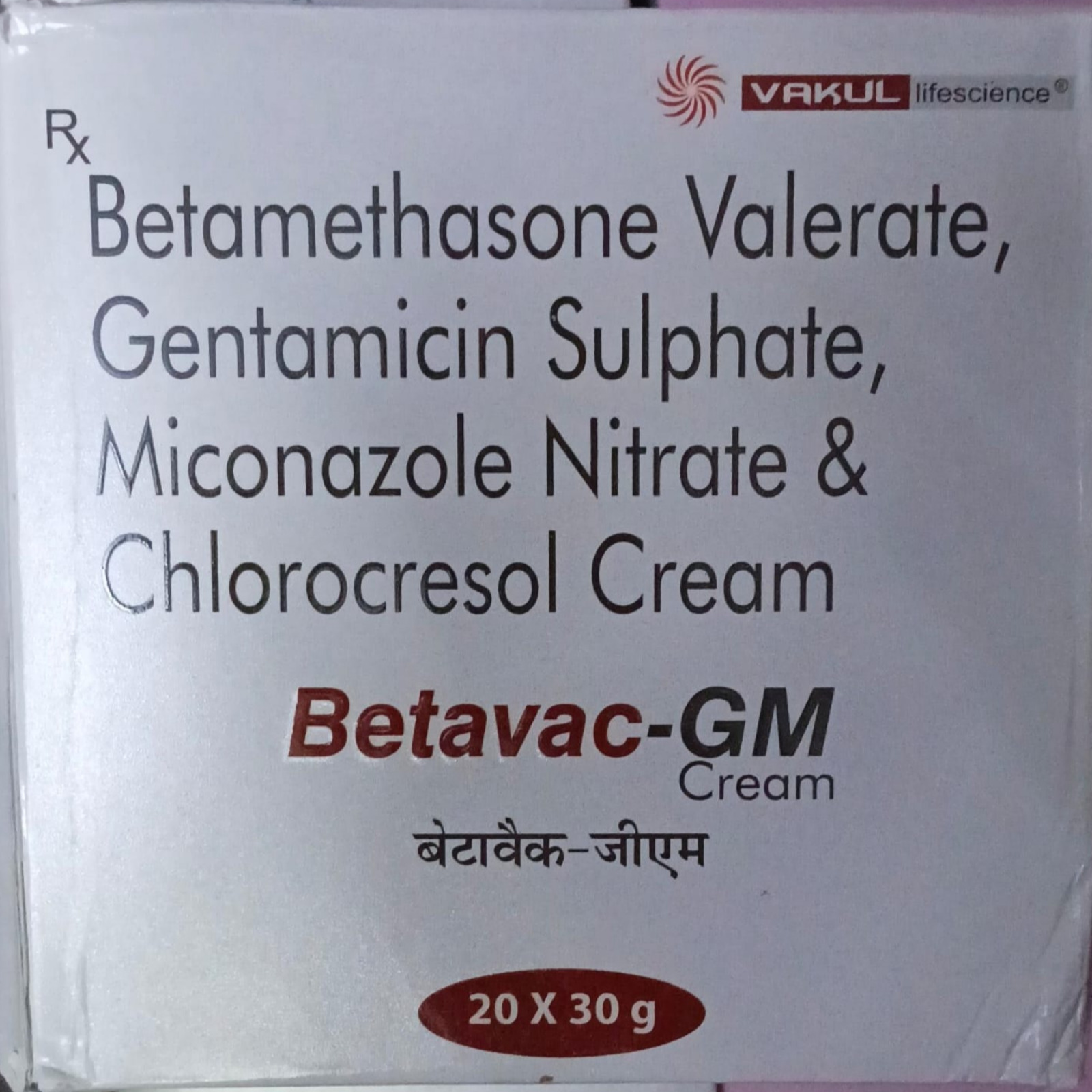
BETAVAC-GM Cream is a triple-combination topical medication. It brings together a potent corticosteroid, an antibacterial agent, and an antifungal agent to treat complex or mixed skin infections accompanied by heavy inflammation.
1. Active Ingredients & How They Work
Betamethasone: A potent topical corticosteroid that rapidly reduces redness, swelling, intense itching, and localized inflammation.
Gentamicin: An aminoglycoside antibiotic that targets and stops the growth of susceptible bacterial pathogens responsible for secondary bacterial infections.
Miconazole: A broad-spectrum antifungal agent that treats superficial fungal and yeast infections (such as ringworm or candidiasis).
2. Primary Indications & Uses
Doctors typically prescribe triple-combination creams like BETAVAC-GM when an inflammatory skin disorder is complicated by both bacterial and fungal components, or when the exact infectious cause is uncertain:
Mixed Skin Infections: Eczema or dermatitis with combined bacterial and fungal involvement.
Infected Intertrigo: Rashes occurring in skin-fold areas (like under the breasts, groin, or between toes) where moisture fosters both bacterial and fungal growth.
Complicated Athlete's Foot or Ringworm: Fungal infections that have become severely inflamed and irritated (often due to scratching and secondary bacterial contamination).
3. Comparing the BETAVAC Family
To see how BETAVAC-GM fits alongside the other variants you've looked into:
BETAVAC-S (Betamethasone + Salicylic Acid): Designed for thick, scaly, non-infected skin plaques (like heavy psoriasis).
BETAVAC-C (Betamethasone + Clioquinol): Designed for inflammation with general antibacterial/antifungal coverage (using clioquinol).
BETAVAC-N (Betamethasone + Neomycin): Designed for inflammation with bacterial-only coverage (using neomycin).
BETAVAC-GM (Betamethasone + Gentamicin + Miconazole): Designed for inflammation with both broad-spectrum bacterial and antifungal coverage.
4. How to Apply & Important Safety Precautions
Application: Apply a thin layer to the affected area 1–2 times daily, exactly as prescribed by your physician. Wash your hands thoroughly before and after application.
Short-Term Use Only: Triple combinations containing strong steroids should generally be used for short durations (typically 1–2 weeks) to avoid complications.
Avoid Occlusive Bandages: Do not wrap, tightly bandage, or cover the area unless specifically instructed by your doctor, as occlusive dressings dramatically increase absorption and the risk of side effects.
Not for Viral Infections: Do not use this cream on viral skin conditions like cold sores, chickenpox, or shingles, as steroids can worsen them.
Facial & Sensitive Areas: Avoid applying to the face, groin, or underarms unless explicitly directed by a healthcare professional.
5. Potential Side Effects
Local Reactions: Mild burning, stinging, itching, or dryness at the application site.
Risks of Prolonged Use: Skin thinning (atrophy), stretch marks, visible capillaries, contact dermatitis, or systemic absorption leading to hormonal side effects.