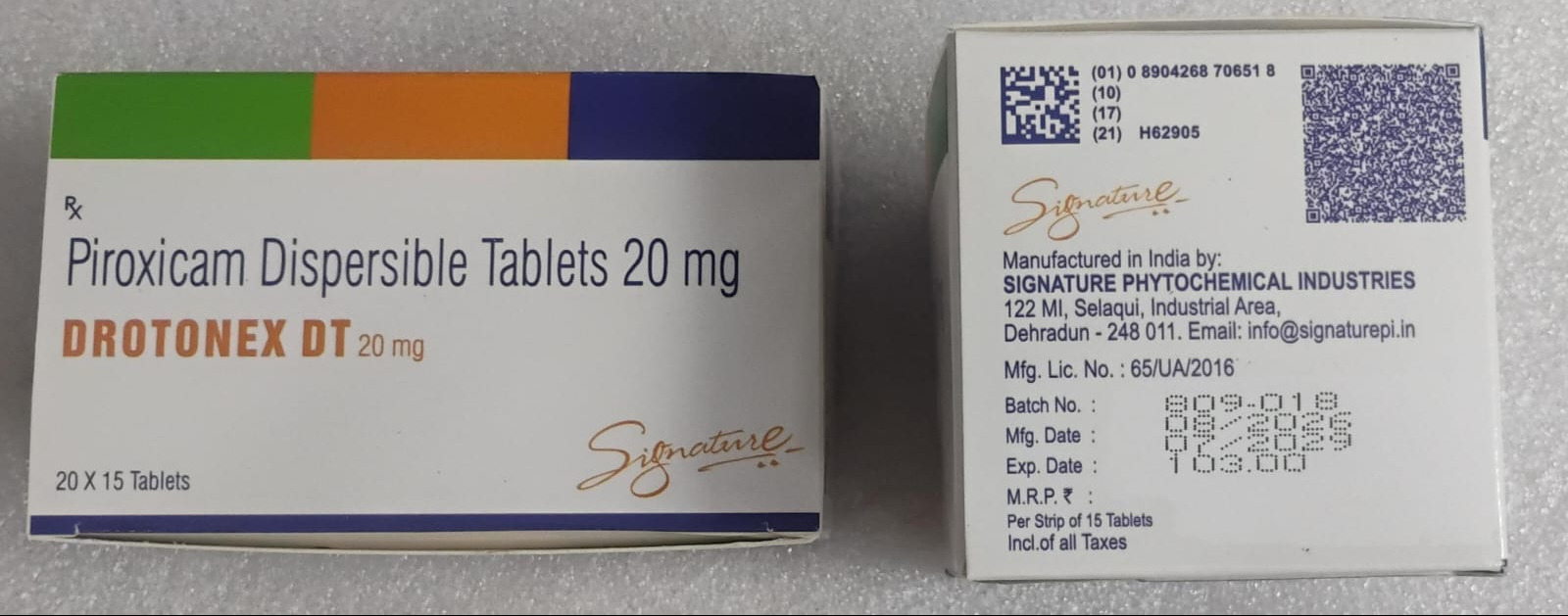
Drotonex DT 20 mg Tablet contains Piroxicam (20 mg) in a dispersible tablet (DT) form. It belongs to a class of non-steroidal anti-inflammatory drugs (NSAIDs) known as oxicams.How It WorksPiroxicam blocks the action of cyclooxygenase (COX) enzymes, which halts the production of prostaglandins—chemical messengers in the body responsible for pain, swelling, stiffness, and inflammation. The dispersible formulation allows the tablet to dissolve rapidly in water for quicker absorption.Primary UsesRheumatoid Arthritis & Osteoarthritis: Relieves pain, joint stiffness, and swelling in chronic joint conditions.Ankylosing Spondylitis: Reduces pain and stiffness in the spine and larger joints.Acute Musculoskeletal Disorders: Relieves severe joint, tendon, or muscle pain (e.g., sprains, strains, or bursitis).Acute Gout Attacks: Helps manage sudden joint pain and inflammation caused by gout.How to TakeDispersible Form: Dissolve the tablet completely in a small amount of water (about 5–10 ml or a few teaspoons) and drink immediately.Take with Food: Always take after a meal or with food/milk to minimize stomach upset and reduce gastrointestinal irritation.Frequency: Typically taken once daily due to Piroxicam’s long half-life in the body, as directed by your physician.Side EffectsCommon & Mild:Nausea, heartburn, or stomach discomfortIndigestion, flatulence, or mild diarrheaHeadaches or lightheadednessMild rash or skin itchingSerious Side Effects (Contact Doctor Immediately):Gastrointestinal Bleeding: Black/tarry stools, vomiting blood, or severe stomach pain.Cardiovascular Risks: Fluid retention, high blood pressure, or increased risk of heart attack/stroke with prolonged high-dose use.Kidney or Liver Impairment: Swelling of ankles/feet, sudden decrease in urination, or yellowing of skin/eyes (jaundice).Severe Skin Reactions: Widespread rash, skin peeling, or mucosal ulcers (e.g., Stevens-Johnson Syndrome).Critical Warnings & PrecautionsStomach Ulcers & Bleeding: NSAIDs like Piroxicam carry a risk of stomach ulcers and GI bleeding, especially in elderly patients or individuals with a history of peptic ulcer disease.Asthma Warning: Avoid if you have aspirin-sensitive asthma, as NSAIDs can trigger severe bronchospasms or allergic reactions.Pregnancy & Breastfeeding: Contraindicated during the late stages of pregnancy (third trimester) as it can cause premature closure of the fetal ductus arteriosus and lead to complications during delivery.Avoid Combining with Other NSAIDs: Do not combine with aspirin, ibuprofen, or other pain relievers unless explicitly recommended by a doctor, as this increases the risk of side effects.