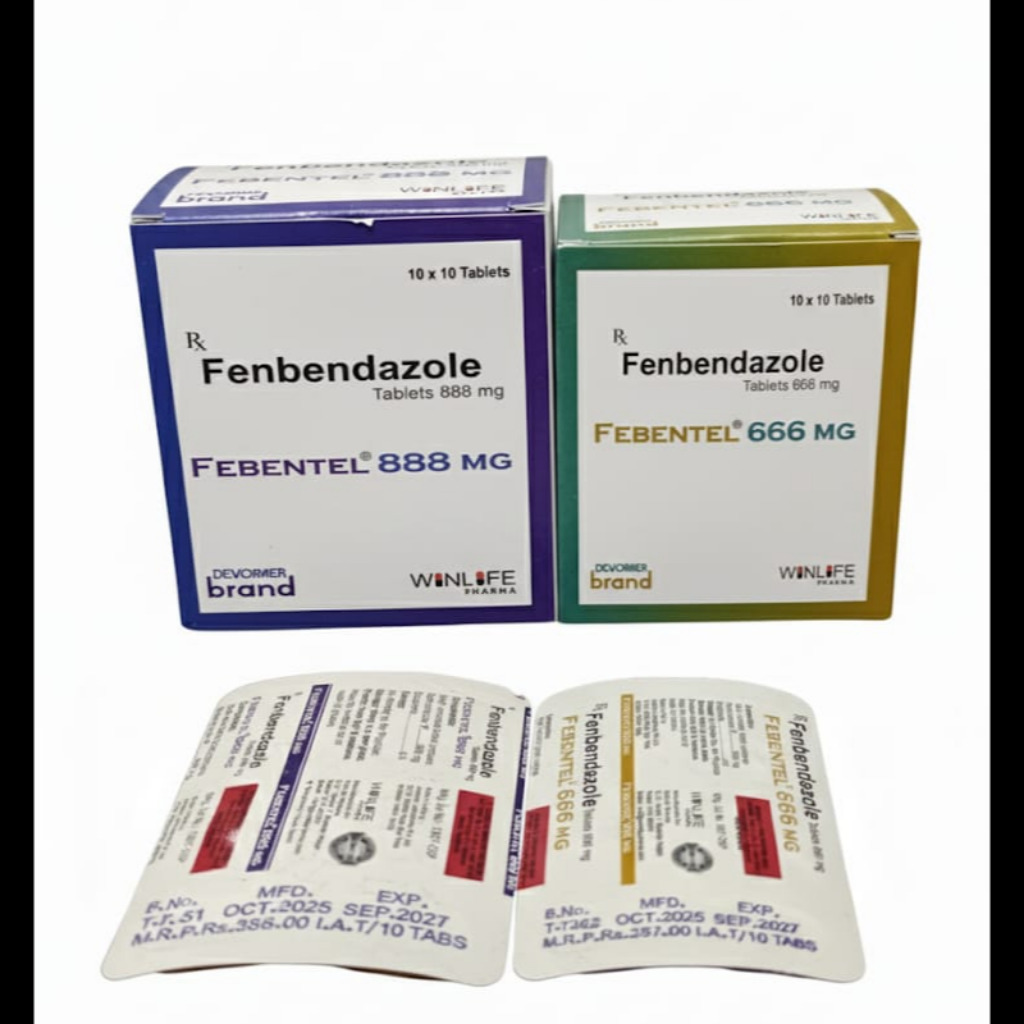
Febentel tablets (most commonly produced in an 888 mg or 222 mg strength, as well as 150 mg, 444 mg, and 500 mg formulations) contain Fenbendazole (or in some combinations, its prodrug Febantel). Important Distinction: Veterinary UseVeterinary Product: Febentel is a broad-spectrum anthelmintic (dewormer) specifically formulated for veterinary medicine. Target Animals: It is prescribed for dogs, cats, horses, cattle, sheep, and other livestock. Not Approved for Humans: Although online discussions sometimes mention benzimidazoles, Febentel is not approved or formulated for human consumption. Human and animal metabolic profiles, dosage safety thresholds, and excipient standards differ significantly. Indications in AnimalsFebentel is used by veterinarians to treat and control a variety of internal parasitic worm infections: Roundworms (Toxocara, Toxascaris) Hookworms (Ancylostoma) Whipworms (Trichuris) Tapeworms (e.g., Taenia species) Giardia: Used off-label or on-label depending on region to treat Giardia protozoal infections in pets.How It WorksFenbendazole works by selectively binding to beta-tubulin in the parasite's cells. This inhibits microtubule formation, which disrupts the parasite's ability to absorb glucose and essential nutrients. As a result, the parasite is starved of energy, paralyzed, and naturally eliminated from the animal's gastrointestinal tract. Administration & Safety (For Pets/Animals)Veterinary Supervision: Dosage is strictly calculated based on the animal's precise body weight and species.Administration: It is typically administered orally with food to reduce stomach upset and improve absorption. Side Effects: While generally well-tolerated in animals, side effects can include mild vomiting, diarrhea, or temporary loss of appetite.If you are looking to deworm a pet or animal, sharing the animal's species, body weight, and any current symptoms will help ensure you get the most relevant advice for their care.