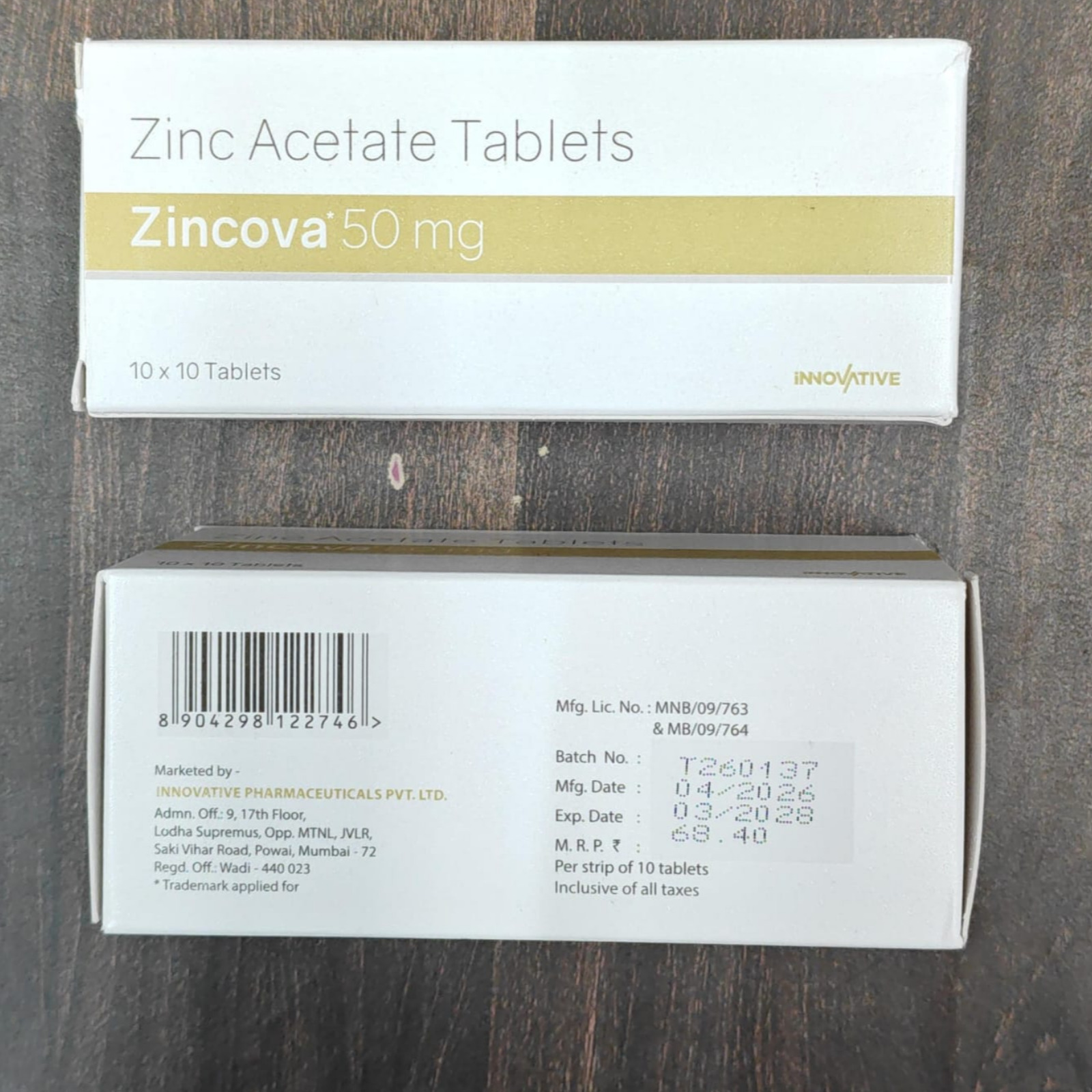
Zincova 50 mg Tablet is an oral zinc supplement formulated to deliver 50 mg of elemental Zinc (typically as Zinc Sulfate, Zinc Acetate, or Zinc Gluconate). Zinc is a vital trace mineral involved in numerous essential cellular functions throughout the body.
1. Active Ingredient & Functions
Elemental Zinc (50 mg):
Biological Role:
Immune Support: Plays a critical role in the development and function of immune cells (such as T-lymphocytes), helping the body fight off bacterial and viral infections.
Wound Healing & Tissue Repair: Essential for collagen synthesis, cell division, and skin tissue regeneration.
Enzymatic Activity: Acts as a cofactor for over 300 enzymes responsible for metabolism, DNA synthesis, and protein production.
Dermatology & Acne Control: Helps reduce skin inflammation and regulates sebum (oil) production.
2. Primary Indications & Uses
Healthcare providers recommend Zincova 50 mg for:
Treatment of Zinc Deficiency: Correcting low blood zinc levels caused by inadequate dietary intake, malabsorption disorders, or chronic illness.
Immune System Boost: Short-term supportive care to reduce the duration and severity of respiratory infections, common colds, or slow-healing wounds.
Dermatological Support: Used as an adjunct treatment for mild-to-moderate inflammatory acne, eczema, and skin lesions.
Reproductive & Metabolic Support: Supporting male reproductive health, sperm quality, and proper metabolic regulation.
3. Usage & Administration Guidelines
Administration: Swallow the tablet whole with a full glass of water.
Take with Food: High doses of zinc (like 50 mg) can cause stomach irritation or nausea if taken on an empty stomach. Taking it with or immediately after a meal helps prevent gastrointestinal discomfort.
Short-Term High-Dose Supplementation: A 50 mg dose of elemental zinc is significantly higher than the standard Recommended Dietary Allowance (RDA) for daily maintenance (8–11 mg/day). High-dose regimens are typically intended for short-term therapeutic use under medical guidance.
4. Potential Side Effects
Gastrointestinal: Nausea, stomach cramps, indigestion, heartburn, vomiting, or metallic taste in the mouth.
Copper Deficiency (Long-Term Risk): Prolonged high-dose zinc intake (over several weeks or months) can interfere with copper absorption in the gut, leading to low copper levels, anemia, or neurological problems.
5. Important Interactions & Precautions
Antibiotic Interactions: Zinc can bind to certain oral antibiotics, such as fluoroquinolones (e.g., ciprofloxacin) and tetracyclines (e.g., doxycycline), preventing their absorption. Take zinc at least 2 hours before or 4 hours after taking these antibiotics.
Iron & Calcium Supplements: High doses of iron or calcium supplements taken at the exact same time can reduce zinc absorption. Space them out by a few hours.
Medical Supervision: If taking for chronic conditions or extended periods, periodic monitoring of blood mineral levels (such as zinc and copper) is recommended.