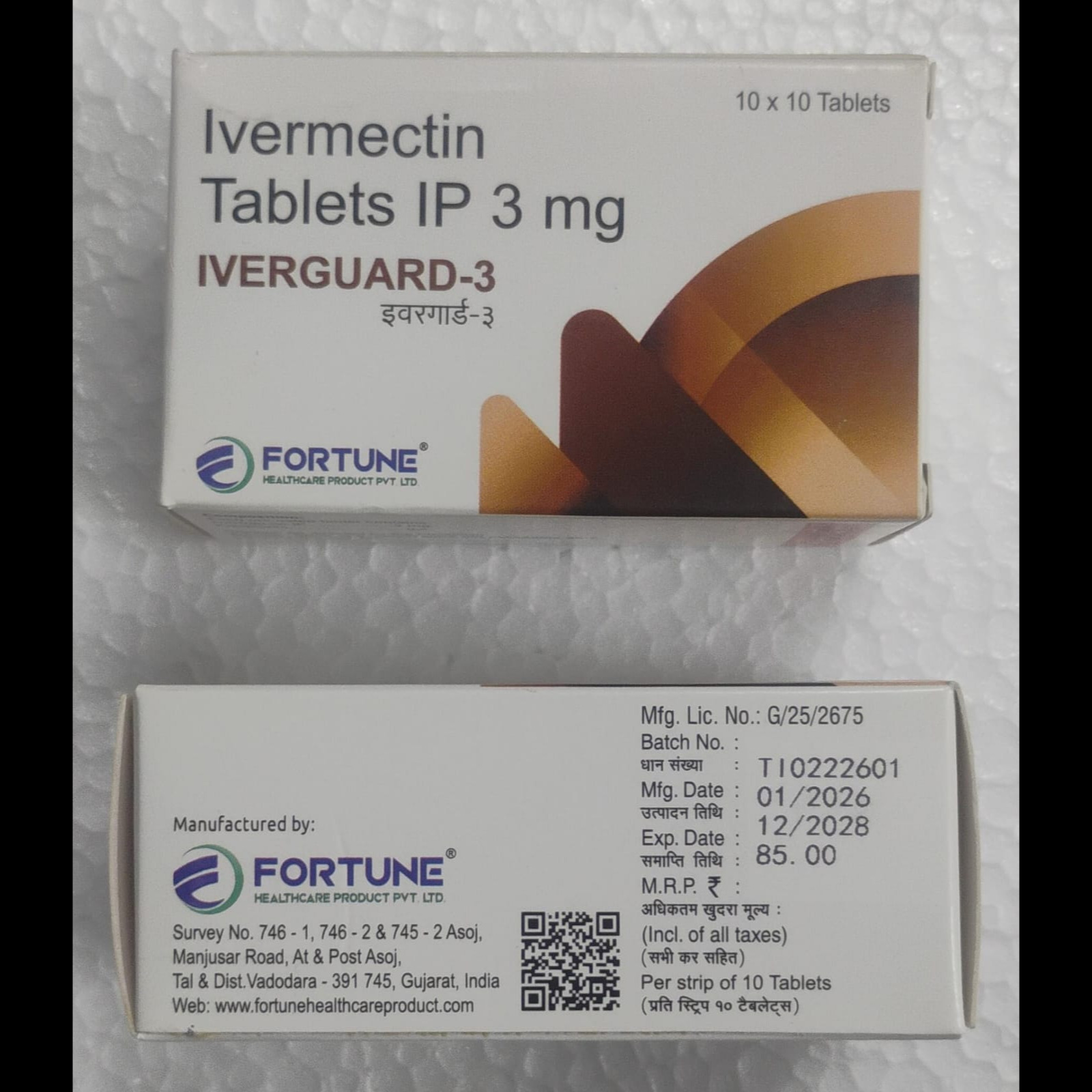
Iverguard 3 mg is an oral prescription medication containing Ivermectin as its active ingredient. Ivermectin belongs to a class of medications known as anthelmintics (anti-parasitic agents).
Primary Uses
Parasitic Infections (Intestinal): Primarily prescribed to treat intestinal infections caused by specific parasites, such as strongyloidiasis (roundworms).
Skin & Tissue Parasites: Used to treat conditions like onchocerciasis (river blindness) and scabies, where microscopic mites infect the skin or tissues.
Off-Label / Other Uses: In certain medical contexts, it has been utilized for inflammatory skin conditions like rosacea (though typically applied topically in those cases) or other parasite-borne illnesses under specialist direction.
How to Take & Dosing Guidelines
Administration: Usually taken as a single dose or a short-course regimen, swallowed whole with a full glass of water on an empty stomach (typically 1 hour before a meal), unless otherwise instructed by your doctor.
Weight-Based Dosing: The exact dosage depends heavily on body weight and the specific type of infection being treated.
Follow-Up: A doctor may require follow-up stool tests or skin examinations to ensure the parasitic infection has been completely eradicated.
Key Warnings & Precautions
CNS / Neurological Warnings: In rare cases, high doses or certain underlying conditions can cause central nervous system side effects (such as confusion, dizziness, or seizures), particularly in patients co-infected with certain heavy parasite loads (like Loa loa).
Liver Function & Blood Tests: Your doctor may monitor your liver function or perform blood tests, especially if you require repeated or multi-dose treatments.
Pregnancy & Breastfeeding: Consult your physician before taking ivermectin if you are pregnant, planning to become pregnant, or breastfeeding.
Dizziness: The medication can cause dizziness or lightheadedness; avoid driving or operating machinery if you feel unsteady.
Common Side Effects
Most side effects are mild and temporary as the body reacts to the medication and the dying parasites:
Dizziness or lightheadedness
Nausea, loss of appetite, or stomach upset
Diarrhea
Mild fatigue or weakness
Itching or skin rash (often associated with the body clearing dead parasites)
⚠️ Important Medical Notice
Prescription Required: Ivermectin must be taken strictly as prescribed by a qualified healthcare professional. Do not self-medicate or alter dosage schedules.
Targeted Therapy: It is effective specifically against parasitic infections and does not treat viral, bacterial, or fungal illnesses.